

Over the past year, Turkey’s strategic footprint in Africa has expanded dramatically, with the country moving simultaneously to lock in economic, military and energy advantages across the Horn of Africa and the Sahel, which is a calculated positioning that is reshaping geopolitical competition on the continent.
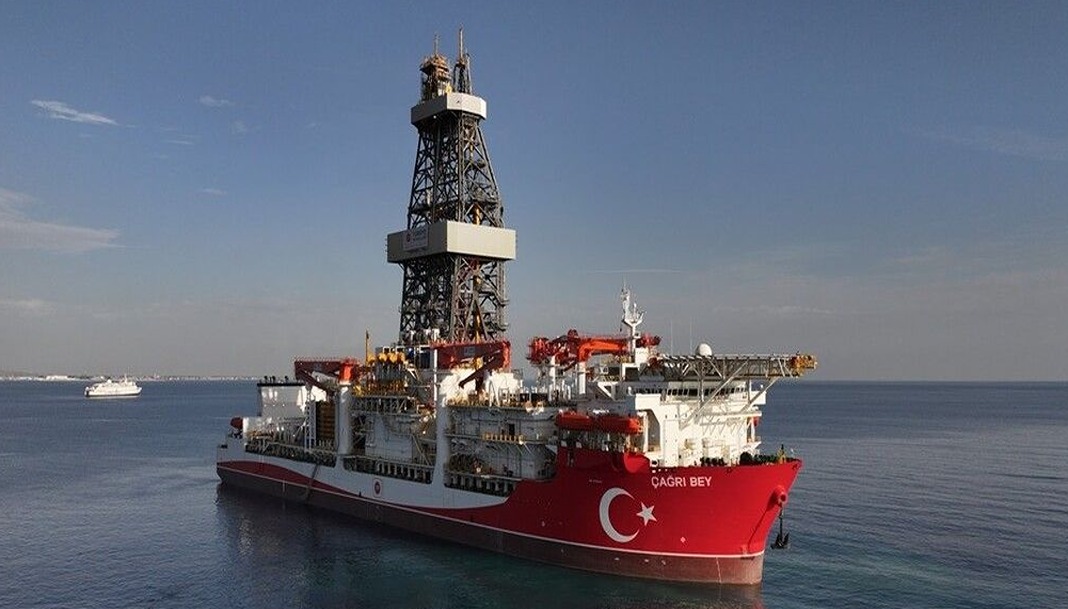
In Somalia, Turkey has operationalised a sweeping security-for-access arrangement that gives it effective control over the Somali coastline and exclusive economic zone. A Turkish deepwater drilling vessel arrived in Somalia’s EEZ in late March, following the discovery of up to 20 billion barrels of commercially viable oil by a Turkish exploration vessel in 2025. A joint Somali-Turkish fishing company, SOMTURK, has been established under a Turkish military-linked entity to regulate EEZ fishing. Three Turkish warships were deployed to Somali waters in February in anticipation of drilling commencement and F-16 fighter jets arrived in January, the first Turkish combat aircraft deployed to Somalia. Construction has begun on a Turkish aerospace base northeast of Mogadishu intended for missile and satellite launches, whilst negotiations for a naval base in North East state are reportedly advanced.
The foundation for this reach was laid in February 2024 when Turkey signed an agreement with Somalia’s Federal Government to manage and protect the EEZ in exchange for 30% of revenues. This is a deal that gave Turkey both a commercial stake and a security mandate along one of the world’s most strategically sensitive coastlines. Turkey already manages the Mogadishu airport and seaport, the latter ranked fourth-highest-performing in Africa by the World Bank in 2024 and has trained at least 16,000 Somali troops over a decade.
In the Sahel, Turkey is extending similar logic to Niger. A memorandum of understanding for Turkish troop deployment was signed in Ankara in early April, marking Turkey’s first regular military presence in West Africa. The deployment builds on years of drone transfers, weapons sales and soft-power engagement and is linked to Turkey’s pursuit of Nigerian uranium as it develops its domestic nuclear energy programme.
Analysts describe Turkey’s approach as “neo-Ottoman” leveraging shared cultural and Islamic identity as an entry point before expanding into infrastructure investment and ultimately defence relationships. The pattern is consistent with humanitarian aid and soft power opening the door, long-term infrastructure contracts follow and military ties consolidate the position. In Somalia, the sequence ran from famine relief in 2011 to infrastructure contracts in 2013 to its first overseas military base in 2017. In Niger, the trajectory is following a similar arc.
Turkey’s African positioning also serves a competitive purpose. Its management of Somali ports places it in direct rivalry with UAE-backed infrastructure in the region, whilst its backing of Somalia’s sovereign claims over Somaliland including countering Israeli recognition of the territory in December 2025 signals that Turkey views the Horn of Africa as a theatre for its broader geopolitical rivalries. For African governments navigating a crowded field of external partners, Turkey is no longer a secondary player. It is competing at the top table.
