

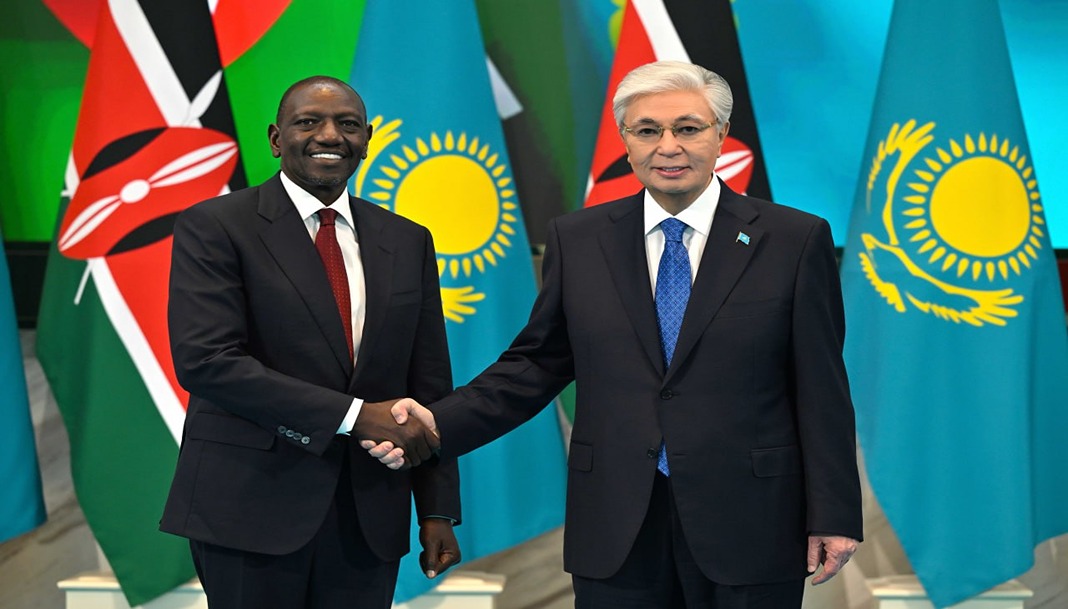
Presidents Kassym-Jomart Tokayev and William Ruto have used the Kazakhstan-Kenya Business Forum to lay the groundwork for a structured economic partnership between two countries whose geographies are distant but whose strategic interests are increasingly aligned.
Tokayev proposed the establishment of a Kazakhstan-Kenya Business Council as a dedicated platform for trade and investment dialogue, alongside regular trade missions, the appointment of a Kazakhstani Honorary Consul in Kenya as a business coordinator and an expert group to develop transport and logistics infrastructure pathways between the two economies. He expressed confidence that these measures would accelerate the formation of an intergovernmental commission on trade and economic cooperation at the ministerial level. “During productive and meaningful talks with President William Ruto, we reaffirmed our shared commitment to deepening mutually beneficial cooperation across a wide range of sectors and identified new areas of partnership. I am optimistic that the intensification of economic ties will be realised in the near future,” said Tokayev.
The logistics dimension of the partnership carries particular commercial potential. Kazakhstan handles approximately 85% of all overland transit traffic between China and Europe, making it a critical node in the Trans-Caspian International Transport Route. Kenya, through the ports of Mombasa and Lamu, is East Africa’s primary maritime gateway serving a regional market of 300 million people. “It is essential to connect the Middle Corridor with Africa’s vital maritime arteries,” added Tokayev. He further proposed cooperation between Kazakhstan and Kenyan port authorities alongside exploration of cargo air routes between Astana and Nairobi. Agriculture, geological exploration, mining, digitalisation and artificial intelligence were identified as additional priority sectors for cooperation.
