

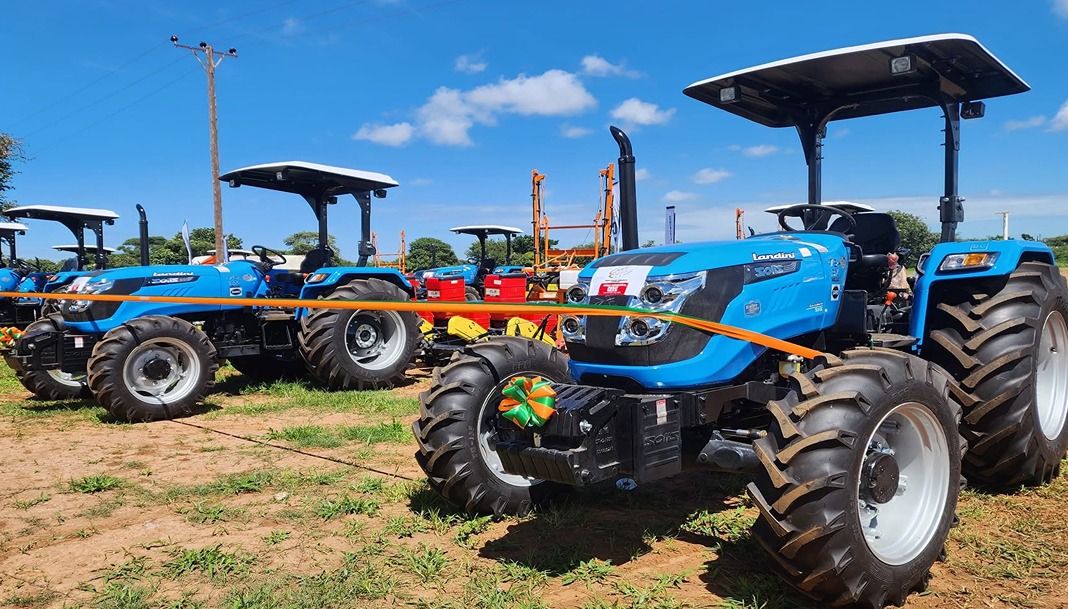
A widening appetite for farm machinery is drawing European suppliers into one of Africa’s largest undermechanised agricultural markets, with equipment providers and development agencies pairing machinery with financing, technical training, maintenance and local partnerships.
The Czech Republic is the latest European player to deepen its engagement, with its embassy in Addis Ababa visiting the Kality Agricultural Mechanization Center of Excellence on 18 September to explore cooperation in machinery testing, maintenance, operator training and technical skills development. The engagement follows the launch of the AgriMECH-ET project by the Czech Development Agency earlier this month. Running through 2028, the initiative aims to increase the use of Czech agricultural technologies in Ethiopia while strengthening local capacity to operate, maintain and repair machinery.
The Czech push adds to growing European involvement in the country’s mechanisation drive. Italy has been exploring opportunities to expand agricultural technology cooperation, with the Italian Trade Agency and the Ethiopian Chamber of Commerce and Sectoral Associations bringing businesses together in July to discuss machinery supply, financing and market access. Italian manufacturers are also considering local assembly and, over the longer term, manufacturing facilities to serve Ethiopia and neighbouring markets. Tractor manufacturer McCormick, owned by Argo Tractors, entered the Ethiopian market in December 2025 through an exclusive distribution partnership with Kerchanshe Group, covering nationwide sales and after-sales services.
Germany’s involvement extends further into financing. Development bank KfW is supporting initiatives designed to facilitate machinery imports and strengthen the Development Bank of Ethiopia’s capacity to provide leasing products for agricultural small and medium-sized enterprises. The financing builds on German-Ethiopian cooperation dating back to 2018, when KfW provided €13 million for an agricultural mechanisation leasing project. In 2024, Germany and Ethiopia also signed €30 million in grant agreements, including support for mechanisation through lease financing and the import of tractors and combine harvesters.
The market opportunity is underpinned by a significant machinery deficit. Of an estimated 18.4 million hectares of arable land, only about 5 million hectares are cultivated using tractors. The Ministry of Agriculture aims to increase the tractor fleet from about 20,000 to 65,000 and combine harvesters from 2,700 to 15,000. Tax exemptions on agricultural machinery imports have also supported equipment availability and encouraged private rental services, potentially widening access for farmers.
As the country works to close its mechanisation gap, European suppliers are increasingly positioning themselves around more than equipment sales, with technology, financing, technical skills and after-sales support becoming part of the market proposition.
