

President Yoweri Kaguta Museveni has urged farmers in Sheema District to embrace irrigation, pasture growing, fertiliser use and commercial agriculture to raise productivity, protect their livelihoods against drought and lift households out of poverty.
Museveni spoke while officiating at a thanksgiving ceremony for Ephraim Kamuntu, the Minister of Internal Affairs and Member of Parliament for Sheema County South, at Bugongi Town Council Playground. “I want to thank all the people of Sheema District for supporting me and Prof. Kamuntu in the last elections,” said Museveni. He said his commitment to fighting poverty dates back to his school days at Mbarara High School and Ntare School, where he developed an interest in how agriculture could improve livelihoods. He recalled visiting government stock farms at weekends, where he saw livestock spraying, improved milk production and agricultural infrastructure raising productivity, in contrast to the subsistence activities many local communities relied on. He said, “It was at Ntare School where I developed the thirst to deliver Africans from poverty, starting with Ugandans.”
The President said his wealth creation campaign gained momentum after he moved from Ntungamo to Nyabushozi in 1966, where he found communities largely engaged in subsistence farming and nomadic pastoralism. The message later spread across the cattle corridor, contributing to efforts to move household production from subsistence to commercial agriculture. The four acre model, introduced in the 1996 National Resistance Movement (NRM) manifesto, was designed to help households with small pieces of land escape poverty through commercial farming, Museveni explained. He advised farmers to dedicate one acre to coffee, another to fruit, a third to pasture for livestock and the fourth to food crops for the household. Families could supplement their incomes with backyard poultry and piggery projects, while those living near swamps could farm fish along the edges.
He said his visits to the Bushenyi area showed that although some families had embraced dairy and coffee farming, many others remained trapped in poverty. This prompted him to seek land on which to demonstrate how households could generate substantial production and income from relatively small plots. Museveni expressed satisfaction with progress but called on political and local leaders to intensify efforts to reach households that had not yet adopted commercial production. “You leaders are the eyes of the people you lead. Reach out to the lowest people in the village and preach the message of wealth creation,” noted Museveni. He urged leaders to ensure that every household understands how to move from subsistence production into the money economy.
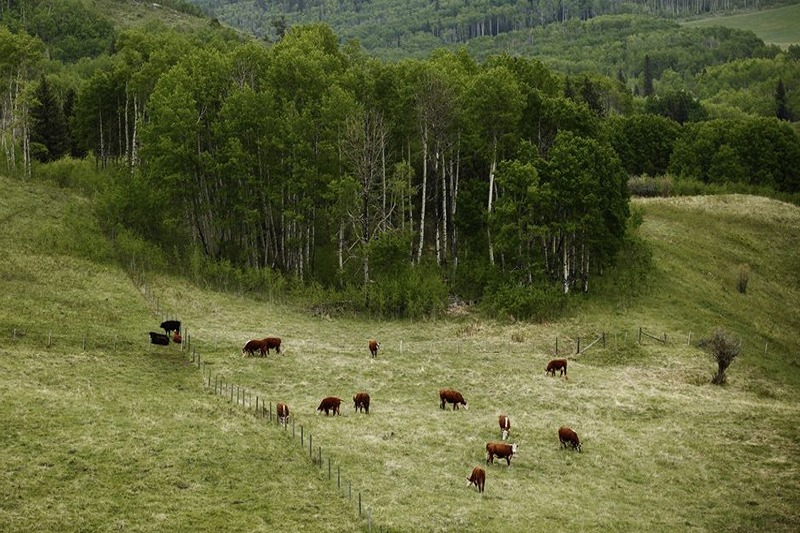
Turning to the prolonged drought that has hit banana plantations in Sheema and other parts of the country, he identified irrigation as a key intervention for protecting crops, improving yields and sustaining production in dry seasons. Underground water resources in parts of Ankole and Kigezi could be tapped for irrigation, he noted, allowing farmers to keep producing when rainfall is inadequate. He also urged farmers to abandon uncontrolled free range grazing in favour of pasture growing and more productive livestock management. Museveni explained that poorly managed free range grazing can degrade land and limit productivity, while proper pasture management and zero grazing allow farmers to keep more animals on the same land. He called on local leaders to encourage farmers to invest in irrigation, grow pasture and use fertilisers to improve crop yields.
The President further urged families to protect wealth across generations by avoiding the subdivision of property after the death of parents. Instead, families could register companies that own the property and allocate shares to beneficiaries, allowing them to inherit interests in the assets without breaking them into smaller, less productive units. On infrastructure, Museveni said the government would work on roads in the area, with some projects already under way. He cautioned residents against using poor roads as an excuse for remaining in poverty, urging them to embrace wealth creation so that improved infrastructure would find them economically empowered. He pledged support for the construction of Kitagata Hospital and other development projects, including those in Bundibugyo and committed two tractors to Sheema District to help address challenges associated with poor quality grass. He also pledged Shs300 million towards completion of St Peter’s Cathedral Bweranyangi, a Church of Uganda project in Bushenyi District.
Deputy Speaker of Parliament Thomas Tayebwa thanked the President for dedicating five square miles of land in Ruhengyere, Kiruhura District, to the Ankole sub region for industries intended to create jobs and promote economic development. Tayebwa also appealed for government support for the Igara Tea Factory, which he said was experiencing financial difficulties and risked being taken over by a bank. He noted that the President had already directed the Uganda Revenue Authority (URA) to waive the factory’s tax arrears and called for further support to sustain its operations.
Kamuntu thanked Museveni for attending, noting that their relationship dates back to their school days at Mbarara High School and Ntare School. He also weighed in on debates about age and leadership, arguing that a leader’s contribution should count for more than age and cited the biblical Book of Job in support of the wisdom associated with older people. He thanked the President for recognising his potential and giving him the opportunity to serve in government, and he commended government wealth creation initiatives including the Parish Development Model (PDM) and Emyooga, saying they were having a positive impact on communities in Sheema District. On behalf of the Sheema parliamentary group, he pledged continued cooperation with the government to ensure that programmes reach people at the grassroots. The ceremony was attended by senior government officials, religious leaders and local leaders.
