

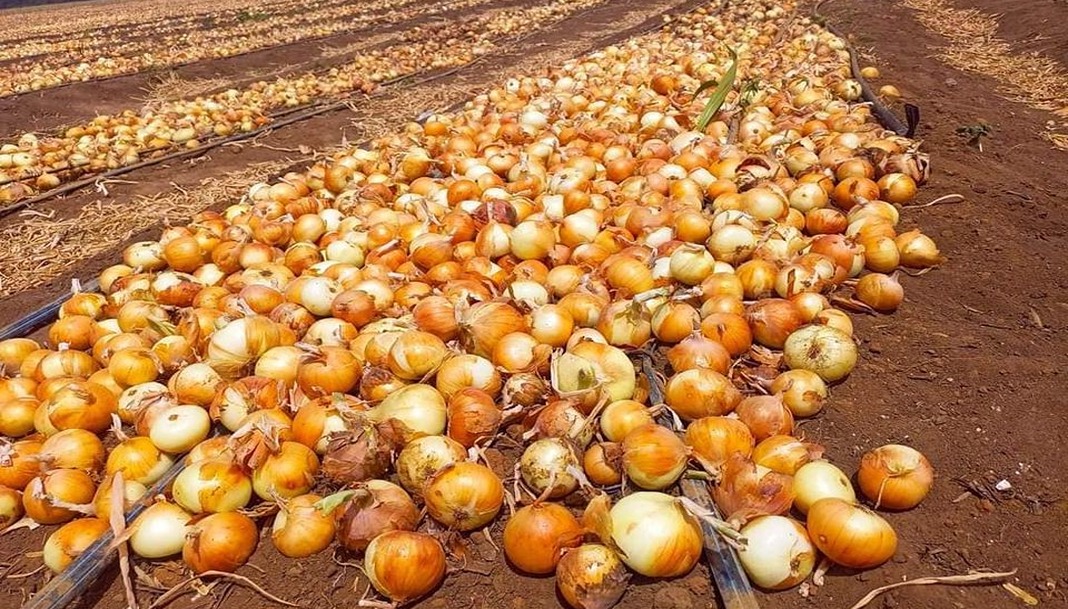
Harvesting of the 2026/27 onion season in southern Brazil is about to begin, with El Niño-related rainfall affecting crop management and causing localized losses.
Between August and September, rainfall in Paraná, Santa Catarina, and Rio Grande do Sul exceeded historical averages. According to the Municipal Government of São José do Norte, accumulated rainfall in the region reached nearly 450 mm in August. Hortifrúti/Cepea collaborators reported that some growers lost entire seedbed areas.
n Paraná, where the first harvests are expected in the second half of October, crop development remains normal in most areas. Guarapuava and Irati were among the regions most affected by rainfall, while localized hail caused moderate damage in some fields.
Affected areas are expected to face increased phytosanitary pressure, particularly from downy mildew, Botrytis, leaf tip blight, and Alternaria, or purple blotch.
The Santa Catarina Civil Defense and Epagri/Ciram forecast above-average rainfall between October and November in Santa Catarina and across southern Brazil. An anti-hail system has been installed in Ituporanga and surrounding municipalities to reduce crop damage from hail.
Harvesting in Santa Catarina and Rio Grande do Sul is scheduled to begin in November.
Inmet forecasts rainfall of up to 150 mm above the historical average in parts of the South during October and November. Higher humidity could increase disease pressure and affect crop development.
Heavy rainfall or flooding could result in conditions similar to the 2023/24 season, when southern growing regions, particularly Rio Grande do Sul, recorded black mold, bacterial disease, rot, longer bulb curing periods, and reduced shelf life.
In more severe cases during that season, crop failures resulted in losses of up to 50% of the harvest. Increased spraying requirements for disease control could also raise growing costs during the 2026/27 season.
Source: hfbrasil.org.br
