

A new Oxford Economics Africa study is putting hard numbers behind a question Uganda’s policymakers have been circling for years, of how much can the government tax the alcohol industry before it starts eroding the very rural economic linkages it depends on?
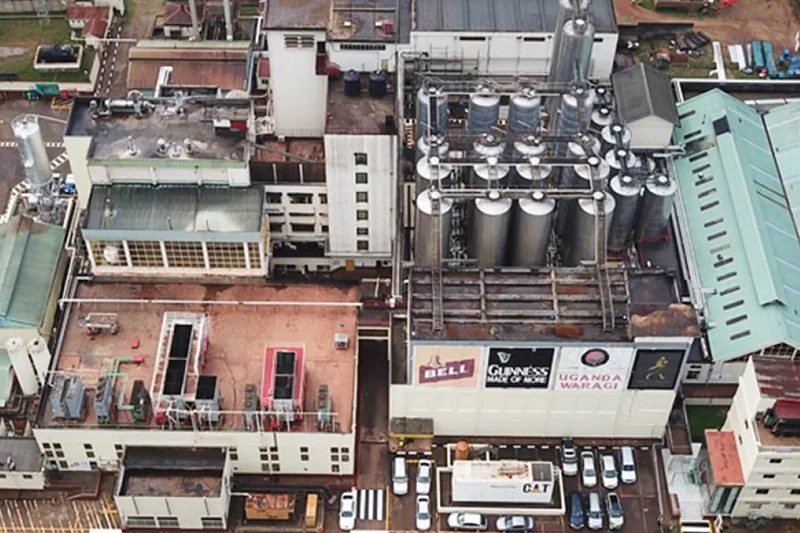
Released on 14 July 2026, the study analyses Uganda’s formal alcohol market from 2020 to 2025, using Uganda Breweries Limited (UBL) as a case study for how regulated manufacturing connects rural farmers to national revenue goals and to the government’s ambition of growing the economy tenfold by 2040. The scale is substantial as in the 2024/25 financial year, UBL’s value chain contributed UGX 1.127 trillion to Uganda’s Gross Value Added, roughly 4% of total manufacturing output, supporting an estimated 100,000 jobs nationally. Nearly half of that economic value is generated “downstream” by distributors, transporters and staff in local bars, restaurants and hotels, while the industry also creates a backward linkage into the village economy through local raw material sourcing.
The government has leaned on the alcoholic beverages sector as a consistent revenue source, running a series of excise duty reforms in parallel with the study period. In the 2025/26 financial year, excise duty on beer made from at least 75% local raw materials was harmonised to 30% or Shs 900 per litre, creating a more consistent tax structure. In the current 2026/27 financial year, the government raised excise duty on selected spirits including Uganda Waragi, Black Label and Cognac from Shs 1,700 to Shs 3,500 per litre, a move expected to generate an additional Shs 85 billion in revenue.
Parliamentary Budget Committee Chairman Amos Kakunda called the report’s data vital for national planning, noting it aligns with the government’s ATMS strategy, Agriculture, Tourism, Manufacturing and Science/Technology. He highlighted a specific mechanism linking the tax debate to farmer welfare: when a factory provides a contract for crops, it gives farmers the confidence to use money from the Parish Development Model (PDM) to improve their harvest, knowing they have a guaranteed buyer. Kakunda pledged to share the data with Parliament to inform budget decisions supporting these linkages but flagged a parallel risk. Illicit alcohol’s market share grew from 65% in 2021 to 67% in 2024, a trend he called a “critical point” that hurts both public health and government revenue.
Ugandan spirits are taxed 18% higher than in Kenya and 65% higher than in Tanzania, a competitive gap that raises questions about cross-border substitution and informal trade, even as the government maintains that higher excise taxes serve a public health purpose by discouraging irresponsible consumption that can undermine workforce productivity and economic growth. The Oxford Economics modelling puts a hard ceiling on how far that logic can be pushed, a 40% increase in alcohol taxes could cost Uganda UGX 182 billion in total wealth and eliminate 21,000 jobs which is a scenario that turns the tax debate from a simple revenue question into a genuine trade-off between short-term collection and longer-term economic value.
Minister of Trade, Industries and Cooperatives Sanjay Tanna framed the government’s approach around partnership with the private sector to hit the national target of a $500 billion economy by 2040. He praised the “scholarly and scientific” nature of the market assessment and was explicit about his reliance on data-driven decision-making. “I cannot make any decisions without data as we need figures,” said Tanna. On the informal market, Tanna deliberately chose softer language over the “illicit” framing used elsewhere, expressing a preference for “informal” and pledging government support for operators seeking to transition into the regulated economy. He encouraged formal manufacturers to deepen local impact through import substitution and value addition, pointing specifically to a proposed malting plant as an opportunity to create jobs and guarantee a market for Ugandan agricultural products.
Tanna closed with a direct appeal to manufacturers on an underused resource of more than 60% of government’s grain storage capacity remains underutilised and he encouraged manufacturers needing storage support to engage the Ministry so these facilities can be put to fuller use, strengthening agricultural value chains and improving market access for Ugandan farmers in the process. Uganda’s industry is sitting at the intersection of manufacturing policy, agricultural linkages and public health, therefore the Oxford Economics data gives Uganda’s policymakers a rare thing in this debate, a quantified line showing exactly where higher taxation stops raising revenue and starts destroying the value chain it’s meant to fund.
