

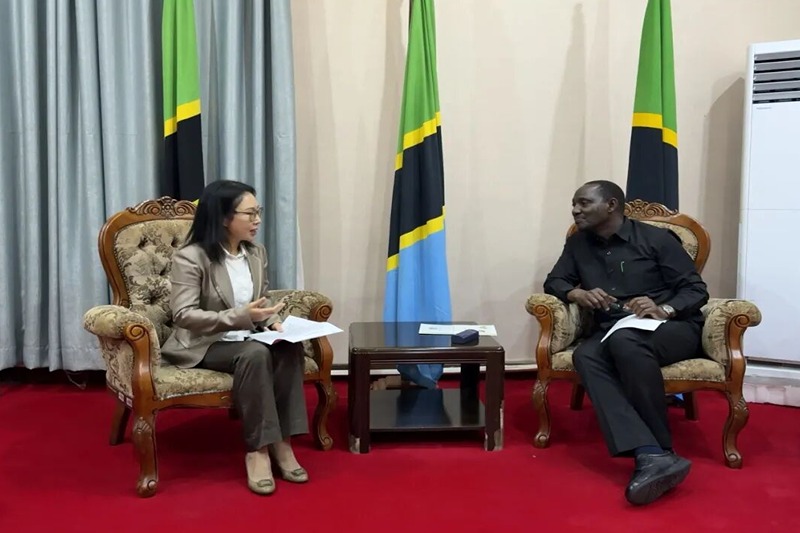
China and Russia used a joint diplomatic showcase in Tanzania to project a unified front and signal their intention to expand economic and geopolitical influence across East Africa.
The event, held at the Russian Cultural Center in Dar es Salaam, marked key milestones in Beijing-Moscow relations while serving as a pitch to developing nations looking for alternatives to traditional Western partnerships. The overture comes amid a massive acceleration in commerce between the two superpowers, with bilateral trade skyrocketing to $228.1 billion in 2025 from just $10.67 billion in 2001.
For Tanzania, the deepening alignment presents immediate commercial openings, particularly in its agricultural and creative sectors. Tanzanian officials disclosed ongoing talks with Moscow to develop a new grape-cultivating and wine-production hub on the fertile lower slopes of Mount Kilimanjaro, backed by Russian technical training and skills transfer for local youth.
“The sound development of China-Russia relations serves as a solid pillar for the process of a multi-polar world and an important source of stability for the international order,” Chinese Ambassador to Tanzania Chen Mingjian said at the event. She noted that the comprehensive partnership now stands at “the highest level in history,” anchoring both nations’ efforts to elevate the voice of the Global South in institutions like BRICS and the Sanhai Cooperation Organization.
The soft-power push featured a screening of Red Silk, a historical film dramatizing revolutionary-era cooperation between Chinese and Soviet intelligence officers. Beyond the cultural optics, the economic gravity of the relationship remains heavily centered on trade and education, with China maintaining its status as Russia’s top trading partner for 16 consecutive years, alongside roughly 80,000 students studying across each other’s borders.
East African nations are increasingly leveraging these competing global interests to secure hard economic gains. Tanzania, which shares ties with both countries dating back to 20th-century liberation movements, is looking to translate these relationships into tangible domestic industries.
“I was speaking with the Russian Ambassador, and he told me that the areas on the lower slopes of Mount Kilimanjaro have fertile soil suitable for crops that can support wine production,” said Paul Makonda, Tanzania’s Minister for Information, Culture, Arts and Sports. “This could be another opportunity to increase production and add value to our agricultural products.”
Makonda added that the government is intentionally keeping several upcoming international film and creative initiatives under wraps to shield them from premature political pushback, preferring to let the economic outcomes speak for themselves.
“We have decided to keep some things confidential so that Tanzanians will simply see the results for themselves,” Makonda said.
