

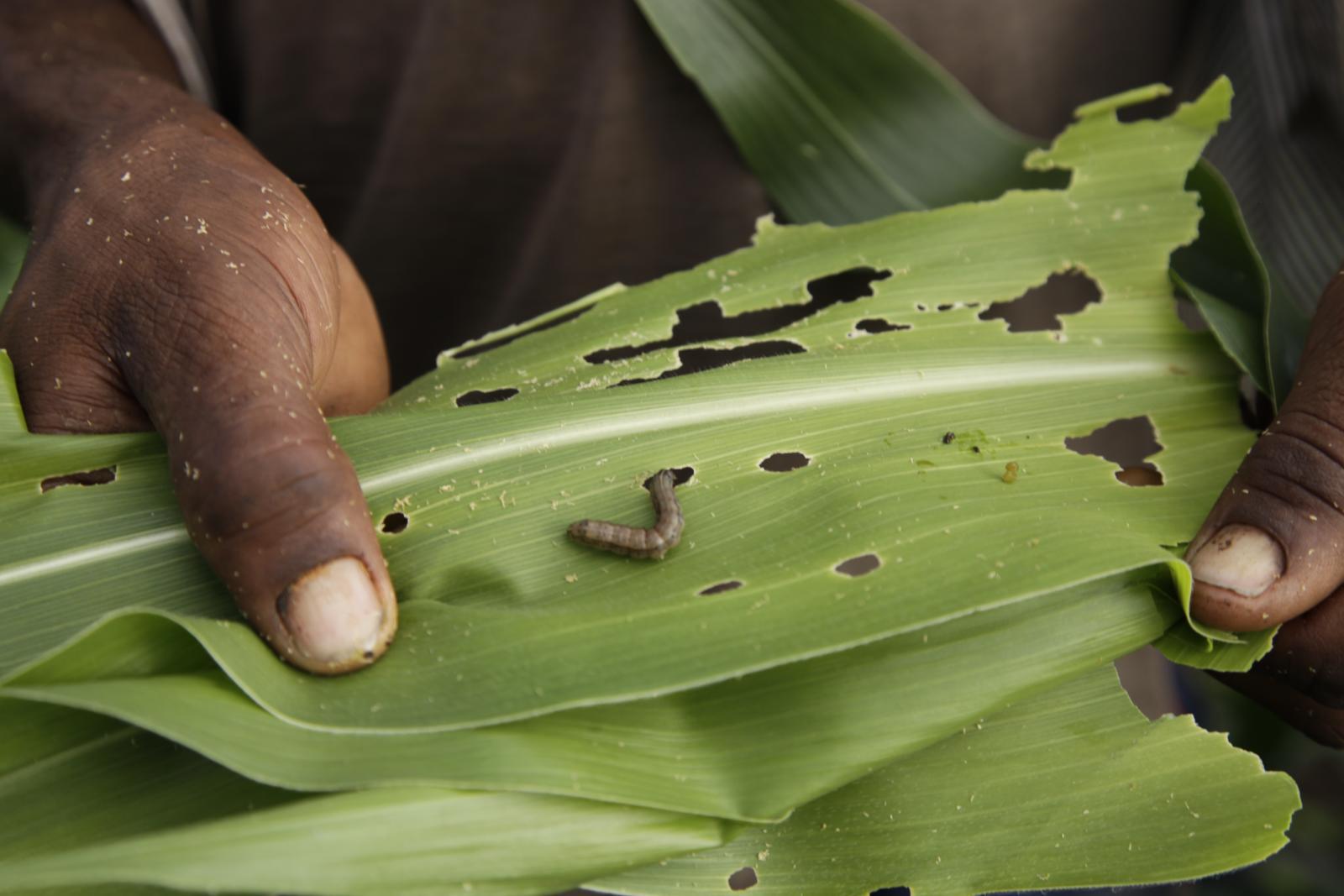
NAIROBI, Kenya – A silent, six-legged invasion threatens Kenya’s breadbasket, but a formidable alliance is striking back. The fall armyworm (FAW), a voracious pest with a taste for maize and over 80 other crops, has been wreaking havoc on smallholder farms, casting a long shadow over the nation’s food security. Now, in a collaborative effort with China and the Food and Agriculture Organisation (FAO), Kenya is stepping up its defenses.
The urgency of the situation is palpable. As Nyabenyi Tipo, FAO Kenya Representative ad interim, explains, “The main challenge has been the lack of knowledge among farmers and over-reliance on chemical pesticides.” This reliance has not only proven unsustainable but also poses significant health risks.
To counter this threat, a unique South-South and Triangular Cooperation project, running from 2023 to 2025, has brought together Kenya, China, and the FAO. The Kenya Agricultural and Livestock Research Organization (Kalro) is a key local partner, bringing invaluable research expertise to the table.
Shifting the Tide: From Chemicals to Nature’s Allies
The heart of this initiative lies in three strategically chosen trial sites: Embu, Kitale in Trans Nzoia, and Mabanga in Bungoma. Here, the focus is on pioneering biological control methods, fine-tuning early warning systems, and empowering farmers with vital knowledge.
“We began by creating an early warning system so farmers can detect FAW in the field,” Tipo revealed. This proactive approach is crucial, allowing farmers to identify and address infestations before they decimate entire crops. Beyond early detection, the project is championing the use of natural enemies to keep the pest in check. This invaluable knowledge is being disseminated through farmer field schools, directly equipping those on the front lines.
The shift away from chemical pesticides is a cornerstone of this strategy. Tipo emphasized the health risks associated with conventional pesticides, advocating for biological methods as “safer, more sustainable solutions.”
A Global Pest Demands Global Solutions
The fall armyworm is not a localized problem; it’s a global menace. As Tipo succinctly put it, “FAW is not a country-specific problem, it is global. This project allows us to tap into international expertise, including support from Chinese experts.” This sentiment was echoed by Dr. Baogen Gu, FAO Senior Agriculture Officer in Pest and Pesticide Management, who highlighted the project’s expansion to Ghana, underscoring its regional impact.
China, having faced its own fall armyworm invasion in 2019, brings a wealth of experience and innovative solutions to the table. Gu noted that China developed various control methods, including biopesticides, resistant crop varieties, physical traps, and even radar-based monitoring systems. These cutting-edge innovations are now being adapted to the specific needs and contexts of African farming communities.
“In China, most farmers are smallholders, just like in Kenya and Ghana, so these practices are easily transferable,” Gu explained, emphasizing the potential for “mutual learning and benefit.”
Unraveling the Mystery of FAW Movement
Understanding the movement patterns of the fall armyworm is critical to effective control. Barak Okoba, FAO Kenya’s Programme Manager for Resilient Livelihoods and Climate Change, stressed this point: “We’re supporting Kenya in strengthening surveillance and early warning systems. Once we can accurately map and predict FAW infestations, we will be in a better position to prevent crop damage.”
The trial sites in Embu, Bungoma, and Kitale are serving as vital research hubs, allowing scientists and extension officers to meticulously track the pest’s migration between maize and other host plants. Even at this nascent stage, the results are encouraging. “Even at this early stage, we have seen that farmers can use simple, locally available materials for pest control instead of chemicals,” Okoba reported. This approach is not only “cost-effective” but also “environmentally friendly,” offering a sustainable path forward for even the smallest of landholders.
The ultimate goal, according to Okoba, is to empower farmers, “even those with just a quarter-acre,” to embrace sustainable practices that ensure food security for their families without the burden of expensive pesticides.
While the complete eradication of the fall armyworm remains a distant hope, the focus for now is on robust management and containment. As Tipo concluded, “We hope that in the future, more countries will unite to fully eradicate FAW. For now, our focus is on managing and containing it.” This partnership signals a powerful step forward in securing a more resilient and food-secure future for Kenya and beyond.
